Why Do We Eat?
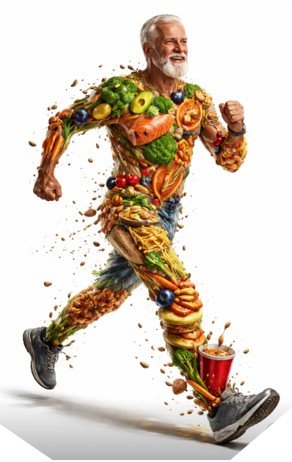
Food is the fuel for life. Energy and nutrients come from the variety of foods we consume. We need that energy to keep going—to stay independent, active, and mentally sharp.
At this stage of life, eating is no longer just about hunger. It’s about maintaining strength, mobility, and quality of life.
What Do We Eat?

We eat foods that are available, taste good, and provide nutrients or other essentials for a healthy life.
However, as men, we often fall into habits—eating what’s easy, familiar, or quick. The reality is, we can eat many things that won’t harm us immediately but don’t give our bodies what they truly need.
Some elements are essential: water, vitamins, minerals, and protein. These are no longer optional, they are critical.
Young and Old
Due to changing nutritional needs, we require different volumes and varieties of nutrients, minerals, etc. throughout our lives. Younger men need high energy for growth and activity.
Older men generally need fewer calories because metabolism slows down—but we need a higher concentration of nutrients to manage changing health conditions. Because of lower absorption rates, extra attention should be paid to calcium and vitamins C, D, and B12. Protein becomes essential to maintain muscle mass.
Our muscle mass starts to decrease around the age of 40–50 and declines more rapidly after 60. The reasons are both biological and physical. Hormonal changes occur that reduce muscle mass and, consequently, our desire for physical activity (movement).
This often worsens when we are removed from our regular daily routines due to illness or retirement. As a result, a vicious cycle begins:
the less muscle we have, the less we move; the less we move, the more muscle we lose.
This is where many men get stuck.
Over time, you may feel weaker, more fatigued, and less willing to move. This can lead to mobility issues, loss of independence, more frequent hospital visits, and a reduced quality of life.
That’s the road we want to avoid.
How Do You Know If You’re Heading Down That Slope?
Take an honest look at yourself:
- Are you moving less than you used to?
- Do you avoid going out more often?
- Do you grab the handrail on stairs when you didn’t before?
- Are you reluctant to pick things up from the floor?
- Do you sit down whenever there’s a chance?
- Have your bathroom habits changed?
- Has your walk (your gait) changed? (try filming yourself walking and comparing it to earlier videos)
These are not just “signs of aging.”
They are signals. And they matter.
What To Do?
Regarding Eating
Eat properly. Not perfectly—properly.
That means paying attention to portion size, nutrient quality, timing, and supplements.
Consult a good nutritionist. If you prefer to learn on your own, read extensively, especially about the nutritional needs of older adults, including nutrient-boosting combinations and negative nutrient interactions.
Focus on what your body needs now, not what it needed 30 years ago.
Keep these in mind:
- You are more prone to dehydration, as the sensation of thirst diminishes with age
- Increased fiber intake is important for healthy digestion
- Taste and smell often decline with age
- You feel full sooner, so smaller, nutrient-dense portions eaten more frequently are beneficial
- Dental issues and reduced saliva production may influence eating habits and sometimes require softer food textures
Regarding Lifestyle
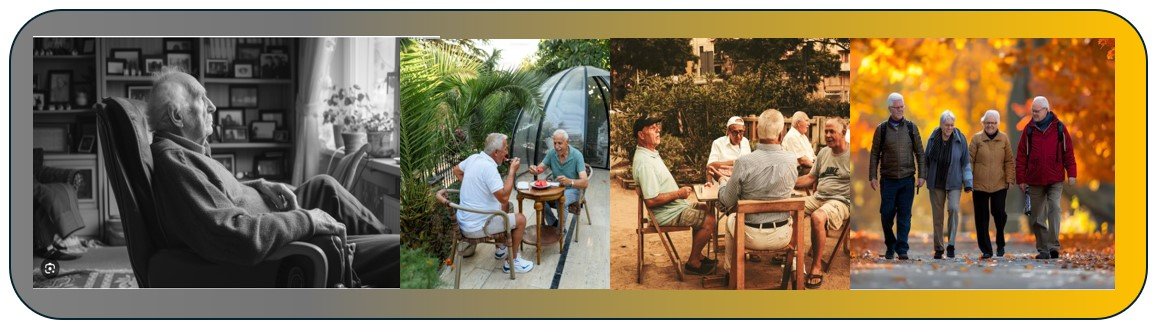
You need both physical and mental stimulation. Stay active and engage with others. If you are still living an active lifestyle, keep on going. It is good – be proud of yourself.
If you feel that some of these changes are coming on, here are some simple ways to start improving.
Move Every Day
- If you are a member of a gym, that is very good. It offers both physical activity and social interaction. Do it daily.
- If you are not a member, consider joining one. However, if you start at home, alone, then just do anything that you consider movement. If you have prior fitness experience, do what you can without overexerting yourself.
- If you are starting fresh or your fitness experience was years ago, begin slowly. The goal here is to do anything, even if it is very easy. Just do it instead of sitting and reading, watching TV, using your computer, or daydreaming. Try to move at least twice a day, ideally at the same time each day, finishing before 6 in the evening.
- The key is consistency—doing it each day and doing it a little bit longer than the previous day. Explore different types of movement to find what you enjoy. This will be the base to build your skills, strength, and speed further. As you gain confidence, consider working with a professional either privately or in a gym setting.
- Add daily walks around your neighbourhood or visit a mall to stroll.
Stay Connected
Men often underestimate this part.
- Reading about others is not socializing. Face-to-face interaction matters.
- Visit places where people gather and engage in conversation.
- Volunteer or get involved in community activities. Don’t forget that there is a lifetime of experience behind you—and others may need it.
- Reach out to old friends or relatives whom you don’t see very often.
- Join a group: cards, walking, singing, board games, anything.
Final Thoughts
I still wonder how I managed it all when I was younger.
I had time for everything. I went everywhere. I ate everything. No issues.
Back then, my body told me what to do.
Today, I must tell my body what to do.
That’s the shift.
It’s not easy—but it’s necessary.
And the sooner you act, the better your tomorrow will be.