

Problems Down Under – My Colonoscopy Story 
The Mental Preparation
From the moment I was recommended for a colonoscopy, the appointment took six weeks to arrive. That meant:
- Six weeks of waiting, concerns, and insecurity.
- Six weeks of reading about it, visiting “Dr. Google,” and thinking about what might go wrong or what they might find that shouldn’t be there.
- Six weeks of fear.
That was the mental preparation—or rather, disturbance.
The Physical Preparation
I had to take a laxative called KleanLyte.
The box contained instructions and information, but to find out the real experience, I turned to Reddit. There, I found plenty of information about how-to, expectations, and experiences. The descriptions ranged from moderate medical terminology and redneck vocabulary to straightforward accounts of what to expect.
Some advice was helpful and accurate, but there were surprises, too.
If you are going to take laxatives, especially KleanLyte, here is what you can expect:
First, the size of the box the pharmacist handed to me was scary big. However, it simply contained two doses with large cups for diluting the active ingredients. Surprisingly, the first sip tasted quite good. However, somehow the chemicals distorted my taste buds, and the rest of the drink was not as pleasant, maybe even very bad.
I had to take one dose the night before and the second on the morning of the procedure. You need this to clean your colon thoroughly so the doctor can see the walls of your colon clearly and identify irregularities.
Warnings:
Before you start, be sure to charge your phone or laptop. Also, you will need to drink lots of water after taking the solution. Keep your water cup within reachable distance.
I took the first dose as directed and drank a lot of water with it.
Reddit users told me it would act within 30–40 minutes and that it was best to stay within 20 steps of a toilet at all times. In my case, after 20 minutes, there was a mild rumble in my stomach. I thought this might be the warning sign, and I had better approach the toilet. I casually walked over and sat down. I should have been faster. While no accident happened, it was a question of seconds.
Redditors suggested not wiping, only tapping, to prevent irritation and pain. I decided just to wash since the shower was nearby. Very quickly, this changed to doing nothing but sitting and waiting for the next round. First, the movements were explosive; later, they changed to short squirts. However, those came quite frequently and without any warnings.
So, I was just sitting and sitting and waiting for the end. The gaps grew longer, but the conclusion was not clearly specified anywhere, nobody told me how I could tell that I had reached the last one of the series.
In my case, a complete two hours passed before I decided I was finished. I cleaned up and thought that it would conclude the day. I was wrong. I just remembered a sentence in the instructions from the doctor that started to trouble me: “Have a good night’s sleep.”
How do you do that after spending two hours sitting with very active bowel movements, and then trying to get up only to realize your legs are numb? Now, should I worry about getting a good night’s sleep without soiling the bed? Or how would I do the same preparation next morning, then travel to the doctor’s office without an accident? And what if the numbness wouldn’t go away, and my legs had to be amputated?
The tingling eventually went away. I hoped the next day would be better (since I now had a day of experience). I moved to a separate room for the night with a plastic sheet on the bed, just in case.
In the end, there was no accident, and I think I had a good night’s sleep, the kind you always have when you are fully exhausted.
I got up early and did everything in the instructions exactly one hour earlier, just in case. The experience was exactly the same: two hours, a questionable finish time, and tingling in my legs.
By this time, I started to get hungry. Not just eating, but even drinking was forbidden.
Since I would be sedated, I needed a driver to take me home afterward. We arrived at the office on time (an hour before the procedure, as requested) and completed the paperwork in about 10 minutes. It was then that the receptionist said the doctor was running a bit late. So much for eating soon. I sat down on the only empty chair and started the wait for my turn. For entertainment, I was trying to figure out who would be called next out of the 20 people waiting there.
Finally, I got in, got myself ready, and they rolled me in. I talked to the doctor for about one minute; in the meantime, the nurse and the anesthesiologist did what they needed to do. The next thing I knew, I was wheeled out to the recovery room. The procedure was finished in about 30 minutes. No pain anywhere, no dizziness, no headache. It went well, but what about the findings?
The doctor came and reported no issues. This was the biggest relief in the past six weeks (and especially the last two days).
So, What Exactly is a Colonoscopy?
It is a medical procedure to inspect your colon for any visible problems you may have.
The need usually comes up after some kind of pain or uncomfortable feeling in your stomach, gut, colon, or anus. This can be after eating, during a washroom visit, or at any time. The doctor is a gastroenterologist, an expert in the problems of the digestive system.
Since you are already prepared and sedated, colonoscopy and gastroscopy are frequently done at the same time. It provides more information for diagnosis and results in only one recovery period for both procedures.
The Methodology and History of Endoscopy
The methodology of a colonoscopy is very similar to other kinds of inspections using a long probe called an endoscope. The name comes from the Greek endon (meaning “inner” or “internal”) and scopos (meaning “watcher,” applied as seeing, observing, or visualization). Similar words we use today, like telescope or microscope, also originated from ancient Greek and Latin.
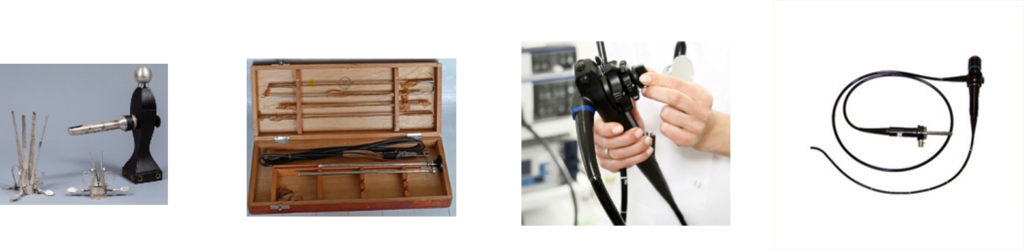
The first endoscopes around 1860 were rigid tubes illuminated by candlelight reflected with a mirror. Later, fiber optic cables (or small bundles of cables) were inserted into a body cavity (urethra, bladder, ear, nose, or other areas like the abdominal cavity through an incision). Initially used just for observation and diagnosis, they were later adapted for manipulation, such as biopsies and surgeries. The next major development didn’t happen until the end of the 1980s, when new computer technology improved visualization, magnification, and image management.
Various procedures have different names based on the area of the body being examined, but the basic principle is the same.
Observing Through Existing Cavities:
- Gastroscopy: For the esophagus, stomach, and upper small intestine.
- Colonoscopy: For the colon.
- Cystoscopy: For the urethra and bladder.
- Urethroscopy: For the ureters and kidneys.
- Tracheoscopy: For the trachea (windpipe).
- Bronchoscopy: For the lungs.
Through small incisions, doctors perform observations and surgeries like:
- Laparoscopy: For abdominal and pelvic surgery.
- Arthroscopy: For joint surgeries.
Endoscopes are frequently used together with other methods, such as injecting dyes for better vision, X-ray imaging, or ultrasound imaging from inside the body.
A further step today is the use of a miniature camera (capsule endoscopy) that can be swallowed. 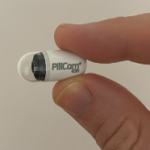 It provides live images from inside as it passes through the digestive tract. However, these images are recorded for later analysis rather than viewed instantly.
While the very first endoscopes were rigid, later models used flexible fiberglass and then flexible tubes equipped with light, cameras, and instrument channels for manipulation, biopsies, or surgeries. These were comparable to wired telephones, while the swallowable version is like a cell phone.
On the Sidelines
It’s not just doctors who use similar techniques and equipment for inspections. Other professions use devices called borescopes.
Plumbers, utility workers, and HVAC technicians use them to see inside ducts; mechanics use them to inspect internal parts of equipment; and firefighters and law enforcement agents use them during search-and-rescue operations or surveillance.
Summary
You need a thorough exam if you have unexplained discomfort or pain anywhere in your digestive system, or bleeding through your mouth or anus. The exam is done by a gastroenterologist, and the procedures are called colonoscopy or gastroscopy.
If you have unexplained and lasting abdominal pain, bloating, or blood in your stool, see a doctor. Most likely, you will be sent for a colonoscopy.
To have a successful procedure, the doctor must have an unobstructed view of the inner walls of your colon. You must clear your colon of basically everything. That is where the laxative comes in.
During the procedure, you are lightly sedated. The doctor inserts the endoscope and takes images of the inner lining of your colon. You don’t feel anything.
Following the procedure, there is about an hour of observation time to ensure you recover properly from sedation and have no issues. You will also have a consultation about the findings and further actions if required. The doctor will also ask if you have any abdominal pain following the procedure.
If there are no issues, you are good to go and can get back to your normal daily activities, including eating (lightly at first) right after the procedure is done.
This is for informational purposes only. For medical advice or diagnosis, consult a professional.