

Appreciating the Health We Still Have
By the time we reach our sixties and beyond, life has usually done a number on us. Knees complain in the morning, backs take longer to loosen up, sleep isn’t what it used to be, and there’s often at least one prescription bottle sitting on the counter. It’s easy – almost automatic – to focus on what’s not working anymore.
But here’s a truth we don’t remind ourselves of often enough:
If you’re reading this, your daily life could be much worse.
That’s not meant to minimize real pain or real struggles. It’s meant to bring perspective.
Independence Is a Form of Health
Many men our age wake up every day unable to walk without assistance. Others are tethered to oxygen tanks, dialysis machines, or hospital beds. Some have lost their independence entirely – not gradually, but suddenly, through a stroke, a fall, or a diagnosis that changed everything overnight. 
If you can get out of bed on your own, shower without help, drive your car, make your own meals, and decide how your day unfolds – those are not small things. They are freedoms. And they are forms of health we often take for granted because they don’t announce themselves loudly.
Don’t Let a Number Define You
I never think of my age. Simply, I just carry on with the daily activities as usual.
This mindset is surprisingly simple: don’t obsess over your age.
Many men who age well will tell you the same thing – they never think of their age. Because the moment you start defining yourself by a number, something shifts. In an instant, you become as old as you fear being.
Age is a fact, not an identity that you have to care about.
Health Is Also What Still Works
We tend to measure health by what hurts. But health is also what still works.
It’s the heart that keeps beating without us thinking about it.
The lungs that fill with air on a cold morning walk.
The legs that carry us to the mailbox, the garage, the grocery store.
The mind that still recognizes faces, remembers stories, and makes decisions.
Yes, things slow down. Yes, recovery takes longer. Yes, we may never feel twenty-five again. But that doesn’t mean we are “unhealthy.” It means we are aging – and aging, when done with awareness, is still a privilege denied to many.
The Past Is Gone – The Present Is Real
There is a quiet danger in living too much in the past. The past has gone – you cannot change it. Replaying old regrets or missed chances only drains energy from the one place where life actually happens: the present.
Enjoy the present, simply in the ordinary moments. A good cup of coffee. A conversation that matters. A task completed. A body that still responds when asked.
The future? The future is ahead of you – maybe. None of us has a signed guarantee. And that’s exactly why today deserves more respect than we usually give it.
Gratitude Is a Strength, Not Surrender
There is also a danger in constant complaining – especially to ourselves. When every ache becomes a grievance, we start living as if decline is our only future. That mindset doesn’t protect us; it shrinks us. It makes days feel heavier than they need to be.
Gratitude doesn’t require pretending everything is fine. It simply asks us to notice what is still good.
A short walk instead of no walk at all.
Stretching instead of stiffness all day.
Cooking at home instead of hospital food.
Choice instead of confinement.
Use What You Have – While You Have It
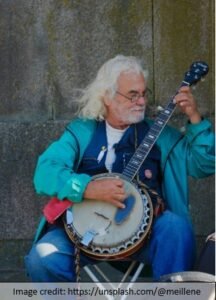 Appreciating the health we have doesn’t mean settling. It means using what’s still there while it’s still there. Moving a little. Eating a little better. Sleeping a little longer. Laughing when we can. Reaching out instead of pulling inward.
Because the truth is this:
Tomorrow is not guaranteed to look like today.
So, if today allows you to stand, move, think, and choose – honor that. Protect it. Respect it. Don’t waste it wishing only for what’s already gone.
Our lives may be imperfect, and our bodies may carry pain. Yet, as long as we hold agency over our days, we possess a wealth far greater than we imagine.
And that realization alone can change how you wake up tomorrow morning.