
 There are many ways to damage your health, but some are surprisingly easy—and dangerously underestimated. One of the most common happens during something that feels productive, even responsible: strenuous physical work followed by a sudden stop.
A classic example?
Shovelling snow.
Especially wet, heavy snow.
On the surface, it seems harmless. You’ve done it before. You’ve done harder things in your life. In your mind—your memory—you are still in your twenties, thirties, maybe even early forties. Strong. Capable. Resilient.
But you are not.
And there are only two ways to truly grasp that fact.
The first is to recognize and accept it consciously, then adjust how you act.
The second is to learn it the hard way—through a medical emergency.
Unfortunately, many people learn through the second option.
What Actually Happens to Your Body
When you shovel snow, your body is under intense stress—even if you don’t feel it right away.
You are:
- Working in cold temperatures
- Bent forward for extended periods
- Using your arms and shoulders aggressively
- Tightening your core to lift and push heavy weight
- Often holding your breath without realizing it
Your cardiovascular system adapts to this stress. Your heart rate increases. Blood pressure rises. Blood vessels constrict because of the cold. Your body goes into survival and performance mode.
So far, so good—as long as the stress remains controlled.
The real danger comes when you stop suddenly.
You straighten up.
You relax your muscles.
You lift your head.
You decide to “just take a quick rest.”
At that moment, everything changes.
Your organs are no longer compressed. Blood vessels straighten. Blood redistributes rapidly. Gravity now works differently on your circulation. Your heart, already working hard, suddenly has to adapt again—instantly.
And sometimes, it can’t.
That’s when chaos starts.
From Dizziness to Disaster
If you are lucky, you feel light-headed or dizzy.
You might think, “I just need to sit down for a minute.”
If you are less lucky, your heart rhythm becomes unstable. Blood flow to the brain drops. Oxygen supply falters. A clot breaks loose. A vessel gives up.
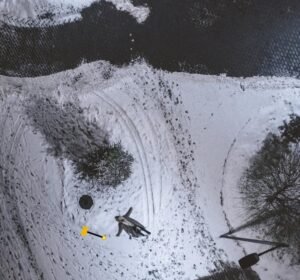
And if you are really unlucky, you collapse.
If someone finds you quickly, you may survive.
If not, that clean sidewalk suddenly becomes irrelevant.
Your risk increases dramatically if:
- You are not used to hard physical work
- You have an underlying heart condition (diagnosed or not)
- You smoke or used to smoke
- You carry excess weight
- You are over 50 and believe “nothing has changed”
The combination of cold, exertion, age, and sudden rest is a perfect storm—and it claims lives every winter.
The Question Worth Asking
So here is the uncomfortable but necessary question:
Is it worth having a perfectly clean sidewalk if you won’t be able to use it?
Pride, habit, and outdated self-image push many people to ignore warning signs. We don’t want to ask for help. We don’t want to admit limits. We don’t want to feel old.
But ignoring reality does not make you younger.
It just makes you more vulnerable.
A Smarter Approach
This isn’t about fear—it’s about respect for your body.
- Take frequent breaks before you feel exhausted
- Stay upright as much as possible
- Avoid sudden stops—cool down gradually
- Dress warmly to reduce vascular stress
- Use smaller loads
- Ask for help or use a snow blower
- And most importantly: listen when your body speaks
Pain, shortness of breath, dizziness, chest pressure—these are not signs of weakness. They are warning signals.
Ignoring them does not make you tough.
It makes you a statistic.
Final Thought
Getting older is not the problem.
Pretending you haven’t is.
Strength today looks different than it did decades ago. Real strength is knowing when to slow down, when to adapt, and when to protect the only heart you have.
Because a clean sidewalk is nice.
But being alive to walk on it is better.