You’ve got your coffee, your freedom, and a schedule completely defined by whatever you feel like doing today. But just as you’re settling into the sweet rhythm of retirement, a new kind of uninvited guest is trying to ring your phone off the hook.
Scammers and criminals (and let’s be honest, those are often the exact same thing) are getting incredibly sophisticated. By combining technology with the massive trail of publicly available info we all leave behind, they can do things that sound like straight-up science fiction.
How Do They Commit Their Crimes?
Their favorite technique is built on a nasty cocktail of fear, urgency, vulnerability, and manipulative opportunism. Unfortunately, the statistics show that the older we get, the more we are targeted for exploitation that relies on emotional bonds, deception, social authority, or sudden technical gaps.
These modern digital pickpockets already know a lot about you, your family, and your friends before they even dial. Social media is an absolute treasure trove for them, and there is a wealth of public data out there if someone knows where to look. By the time they phone you, they might actually know more about your immediate social circle than you can recall off the top of your head.
The other half of their toolkit is pure technology. They can easily “spoof” your caller ID, making any phone number they want appear on your landline or cell screen—whether it looks like your local bank or your own area code.
Even wilder? They now use real-time AI voice changers. These programs can instantly alter a scammer’s voice to sound exactly like your grandkid, a popular TV presenter, or a famous politician. They can adjust the speed, tone, pitch, and even mimic a specific regional accent on the fly while they are actively talking to you. All it takes is a short, innocent recording of the original voice captured somewhere online, which they repurpose later for a very different, malicious intent.
Where is the Danger in “YES”?
Think about how many banking apps, customer service hotlines, healthcare operations, and government services now use voice verification. We don’t even think twice about it when talking to smart home devices like Apple’s Siri or Amazon’s Alexa. It’s not just the sound of your voice they track; modern security systems measure incredibly tiny, unique characteristics of your speech patterns to verify it’s you.
Unfortunately, high-tech AI can mimic those exact biometrics perfectly.
This is why, if someone unknown calls you, do not say “YES.” Don’t say, “Yes, I can hear you,” or “Yes, I understand.” If you do, they can record that brief snippet of your voice and play it back during an automated phone call with your bank to bypass security and verify your identity. Just like that, the gates of heaven open up for the criminals. That is the dangerous new power of a simple “YES.”
Because modern software can so accurately clone a specific person’s pitch and speech patterns, relying solely on voice authentication is no longer considered secure by tech experts.
In fact, we are currently living through a major transformation in how institutions handle speech recognition—essentially, they are phasing it out. Until alternative verification methods are fully rolled out, most institutions are leaning heavily on two-step verification, sending a temporary secure code to the phone number or email they have on file for you.
How to Protect Your Wealth (and Your Sanity)
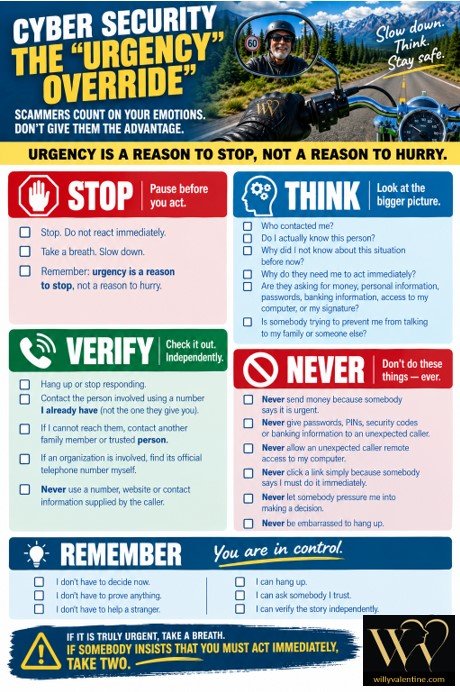
You don’t need a degree in computer science to keep these guys out of your pockets. A few practical adjustments will keep you firmly in the driver’s seat:
- Be Mindful of Unknown Callers: Avoid speaking extensively to strangers, and absolutely avoid phrases like “Yes, I can hear you.” If a caller seems suspicious or vague, simply hang up.
- Opt Out of Voice Biometrics: Call your bank, brokerage, and insurance firms. Explicitly request to disable voice verification on your accounts. Ask to use traditional alphanumeric passwords, PINs, or authenticator apps instead.
- Establish a “Family Password”: Because AI can clone a loved one’s voice to pull off those terrifying emergency scams (like pretending to be a grandson who needs immediate bail money), create a secret code word with your family. If someone calls from an unknown number claiming to be a relative in distress, calmly ask them for the family password. If they stumble, you’ll know it’s a fake.
Retirement is all about finally being able to say “yes” to the things you actually want to do. Let’s just make sure we aren’t giving that word away to a scammer on the other end of a phone line.